← gallery
NGC 7635 (Caldwell 11) · Emission Nebula
Bubble Nebula
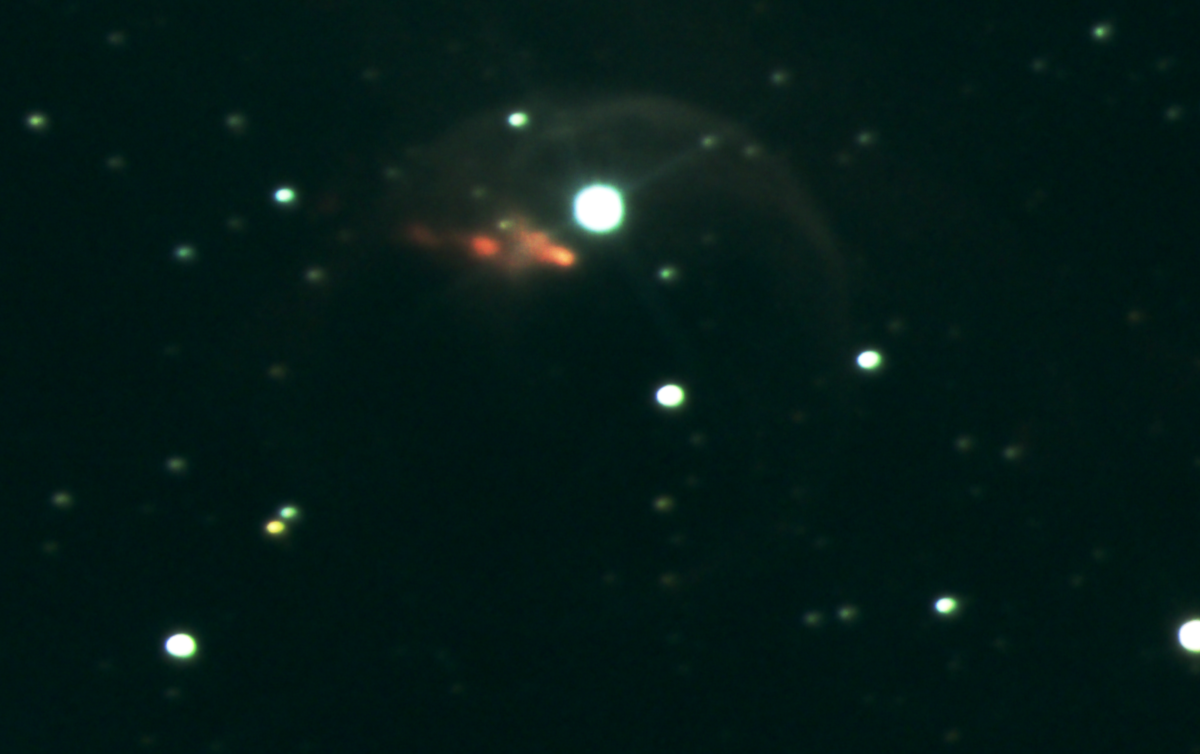
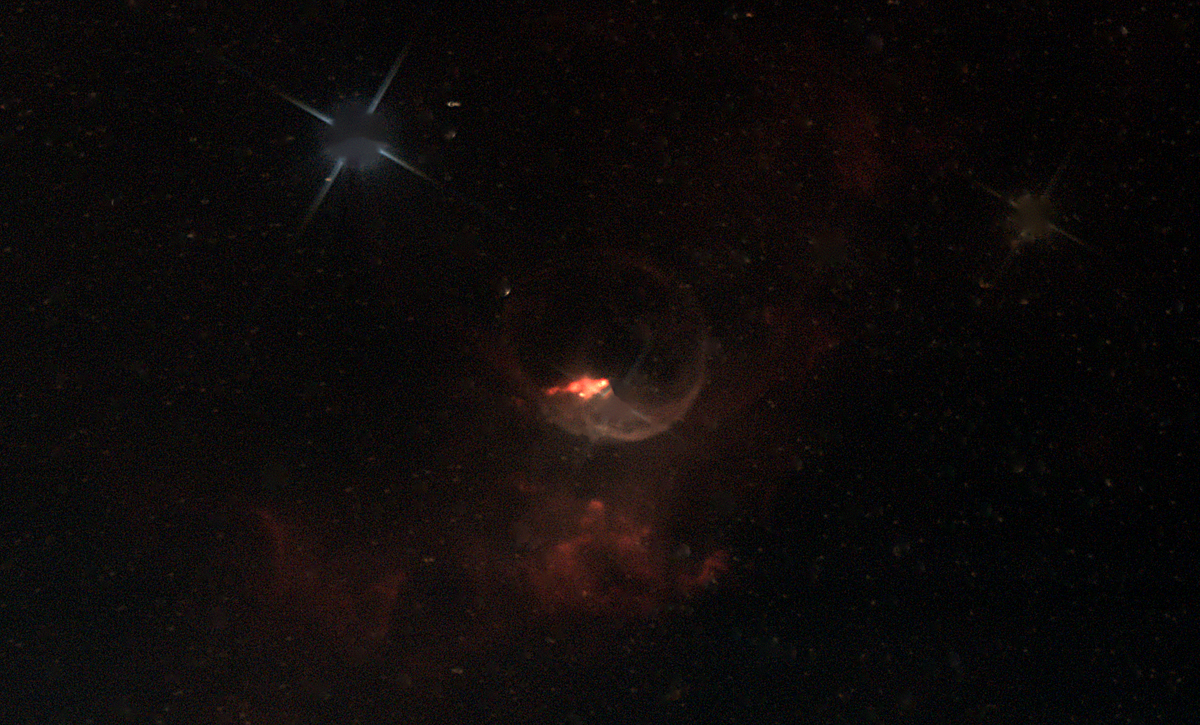
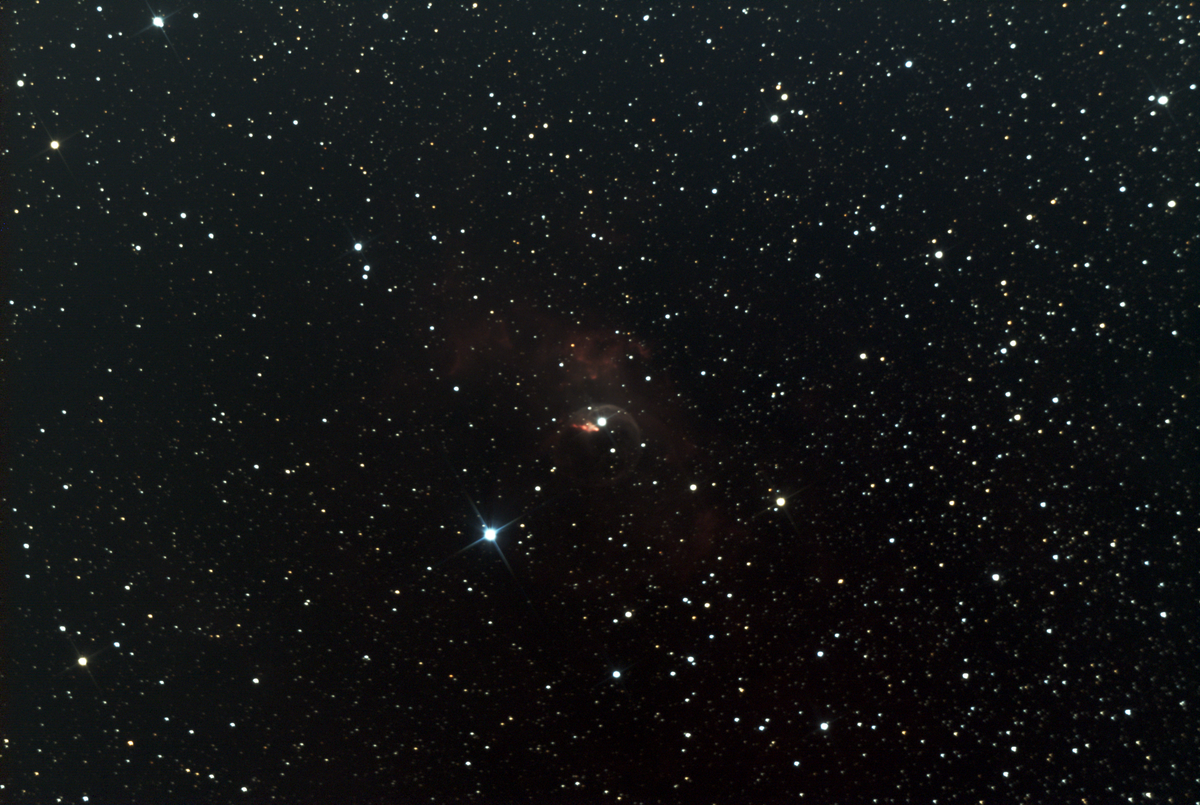
An enormous shell of glowing gas blown by the stellar wind of an O-type hot star at its centre. The bubble itself is roughly ten light-years across, surrounded by a dense molecular cloud that resists further expansion.
NGC 7635 is the product of a single very massive star — SAO 20575 (also catalogued BD+60° 2522) — pushing against the cold, dense gas it was born inside. Stellar wind from the hot O-type giant travels outward at roughly 1,800 km/s, and where that wind crashes into the surrounding interstellar medium it carves the spherical shock front amateurs see as the Bubble.
The central star is some 45 times more massive than the Sun and tens of thousands of times more luminous, yet it sits noticeably off-centre inside its own bubble — the result of the surrounding cloud being denser on one side than the other, so the shell expands faster in the less-resistant direction.
For imagers the Bubble is one of the great autumn / winter targets in Cassiopeia. It responds brilliantly to narrowband — Hα picks out the red shell beautifully, and OIII reveals the more delicate ionised oxygen front trailing behind. It sits close enough to the open cluster M52 that a wide enough field can frame both. Distance estimates have varied for years; modern values cluster around 7,000–11,000 light-years.
// imaging sessions
session // 01
03.09.2025 OSC + dual-band Hα+OIII — 200P + 183CA from Plau am See
- Gear
- Sky-Watcher Explorer 200P Newtonian · Sky-Watcher EQ5 Pro SynScan GoTo · ToupTek 183CA · TS-Optics 2" Newtonian coma corrector · Pegasus Astro Gemini EAF · 50/90 mm guide / finder scope · ToupTek 327C Mini guide camera · ToupTek motorized filter wheel (AFW / EFW)
- Filters / frames
- 2" Hα + OIII dual-band
- Total integration
- ~4 h
- Frames
- ~60–80 × 180–300 s subs
- Sensor
- gain 100
- Location
- Klebe, Plau am See, Mecklenburg · Bortle 3
- Software
- N.I.N.A. (Nighttime Imaging 'N' Astronomy) · Siril · GIMP · PHD2
First proper Bubble Nebula campaign — OSC behind the 2" dual-band filter on a moonless September night at Plau am See. PHD2 guiding through the 50/90 finder-scope-as-guide + 327C, autofocus via the Pegasus EAF.